Església Parroquial de Sant Bartomeu
The parish church of Sant Bartomeu, documented as early as the 13th century, is the result of successive construction phases that have left their mark on the building, making it one of the most distinctive structures on the island, with elements from different architectural styles: Romanesque, Gothic, Baroque, Neoclassical, and Modernist.
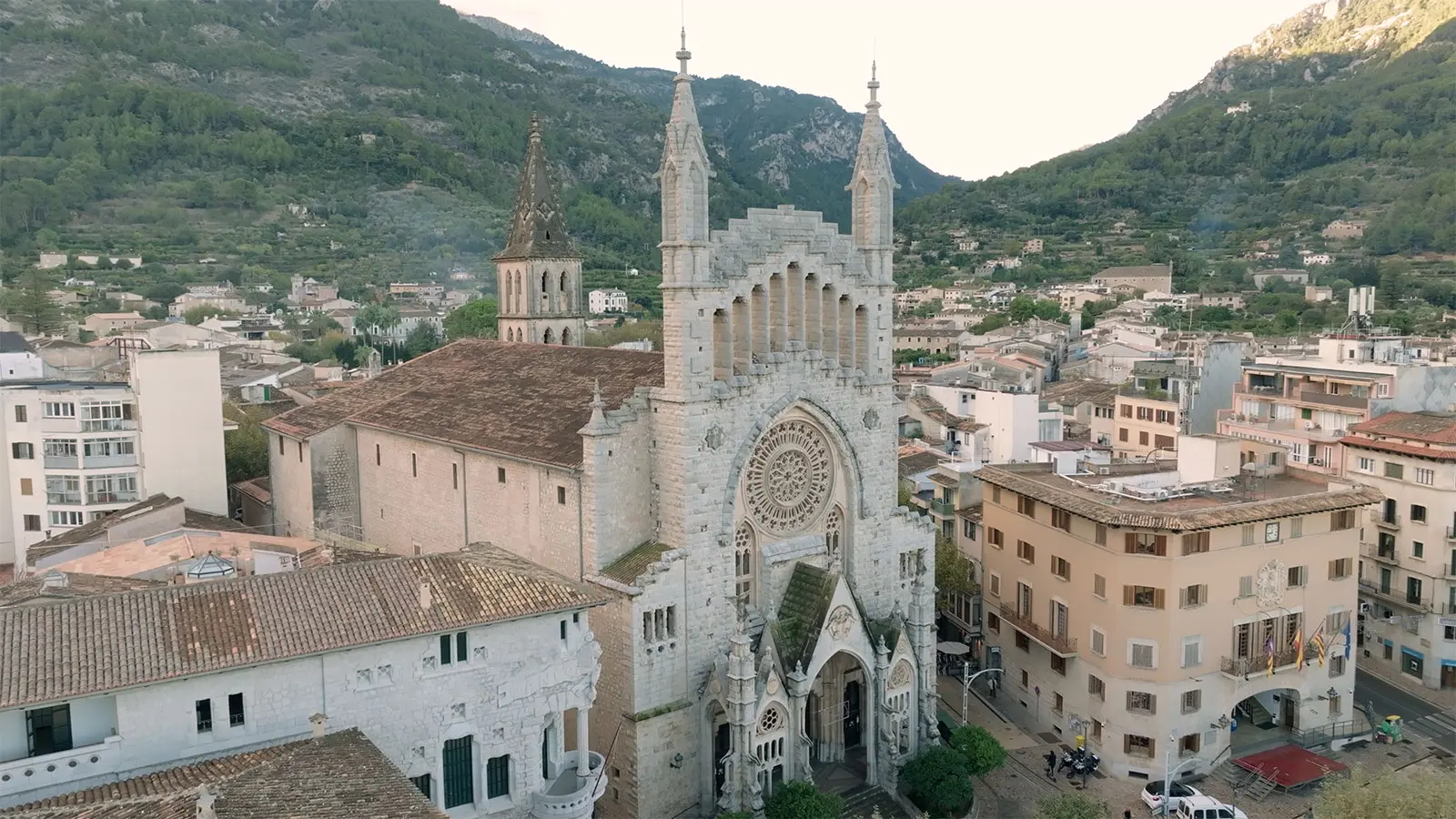
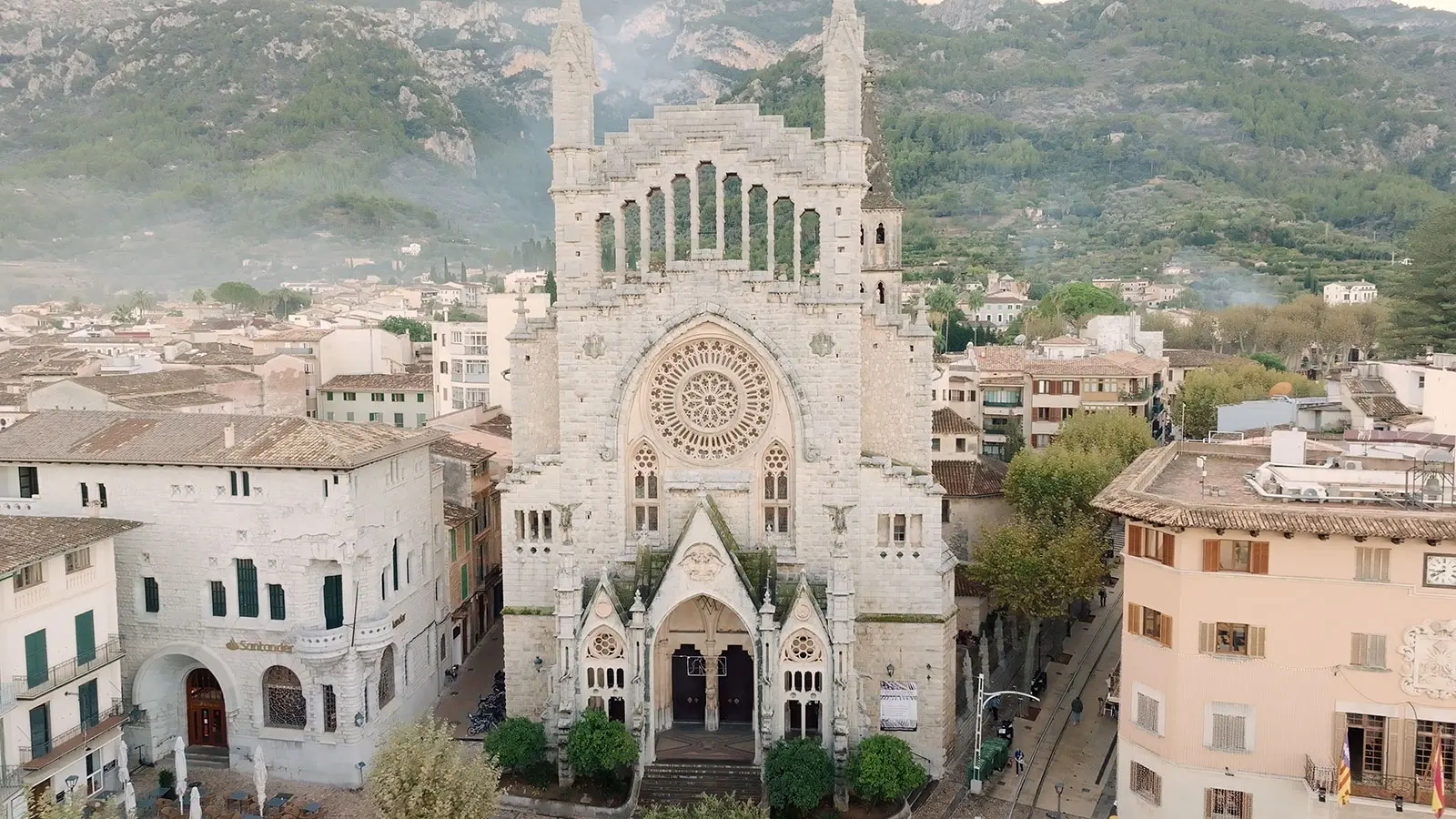
At the beginning of the 20th century, during the socio-economic growth of the Vall, the rector Mn. Sebastià Maimó decided to renovate the Baroque façade of the church, opting for the fashionable architectural style of the time, Modernism. The project was commissioned to the Catalan architect Joan Rubió, a disciple of Antoni Gaudí.
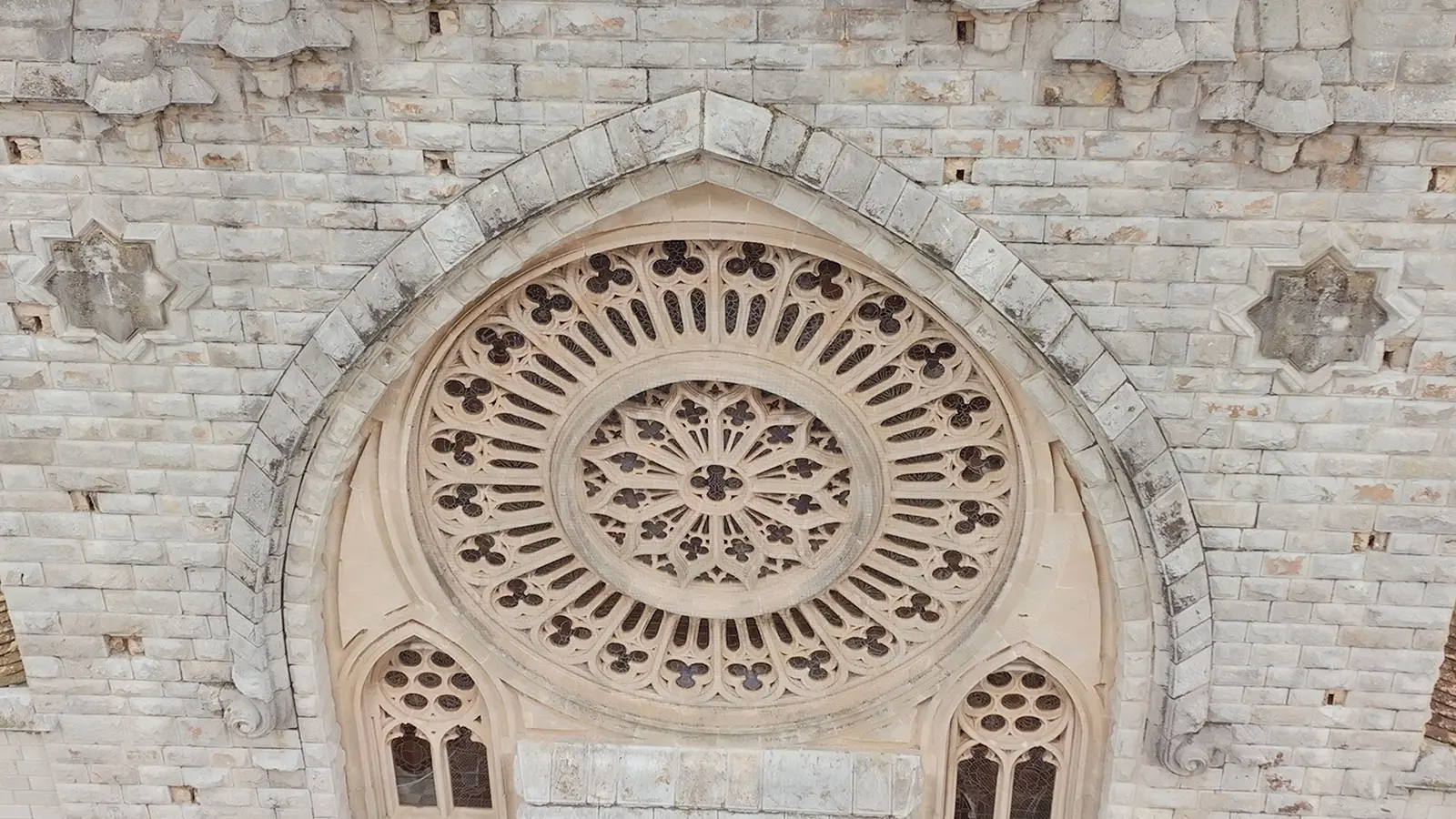
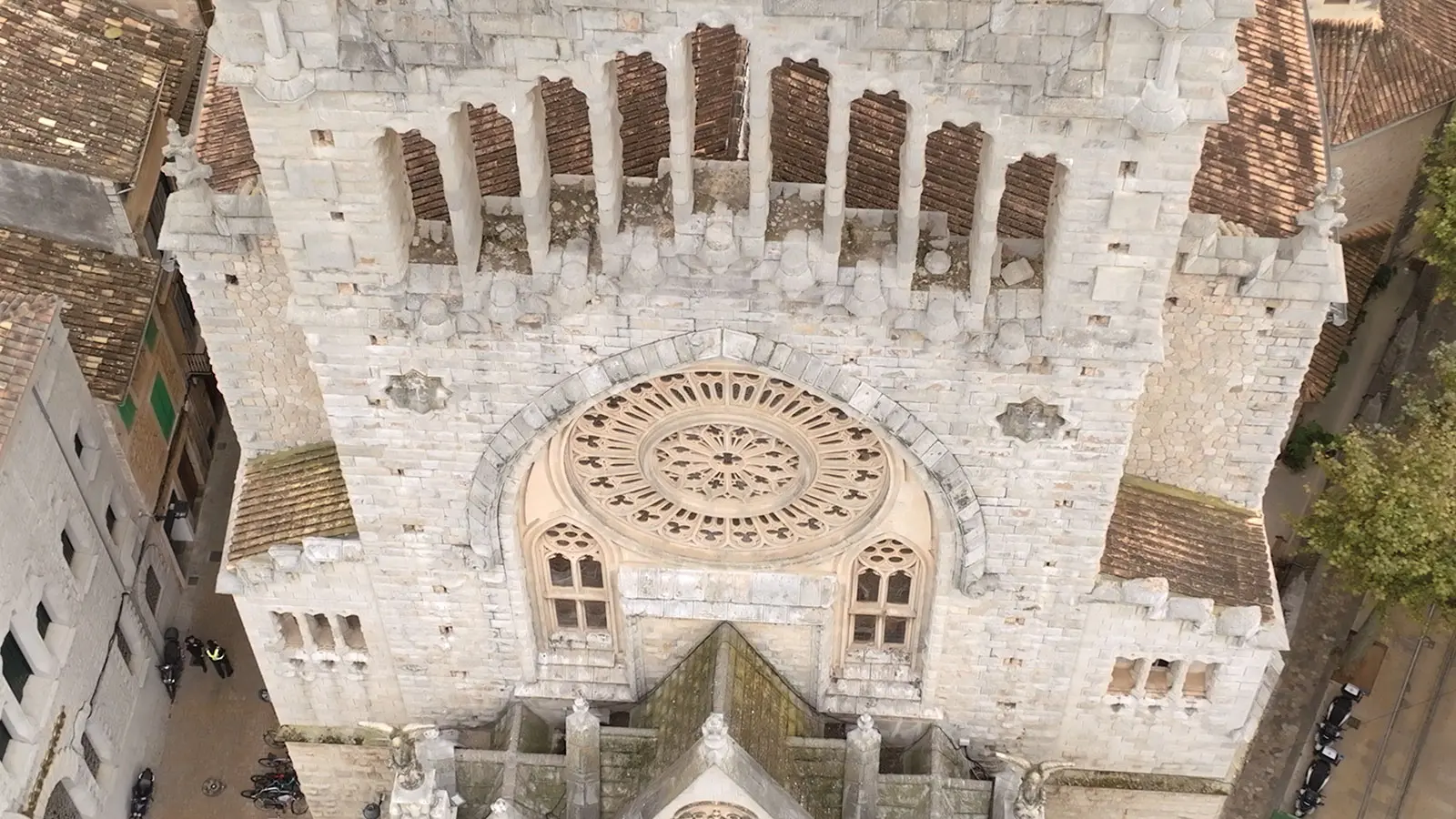
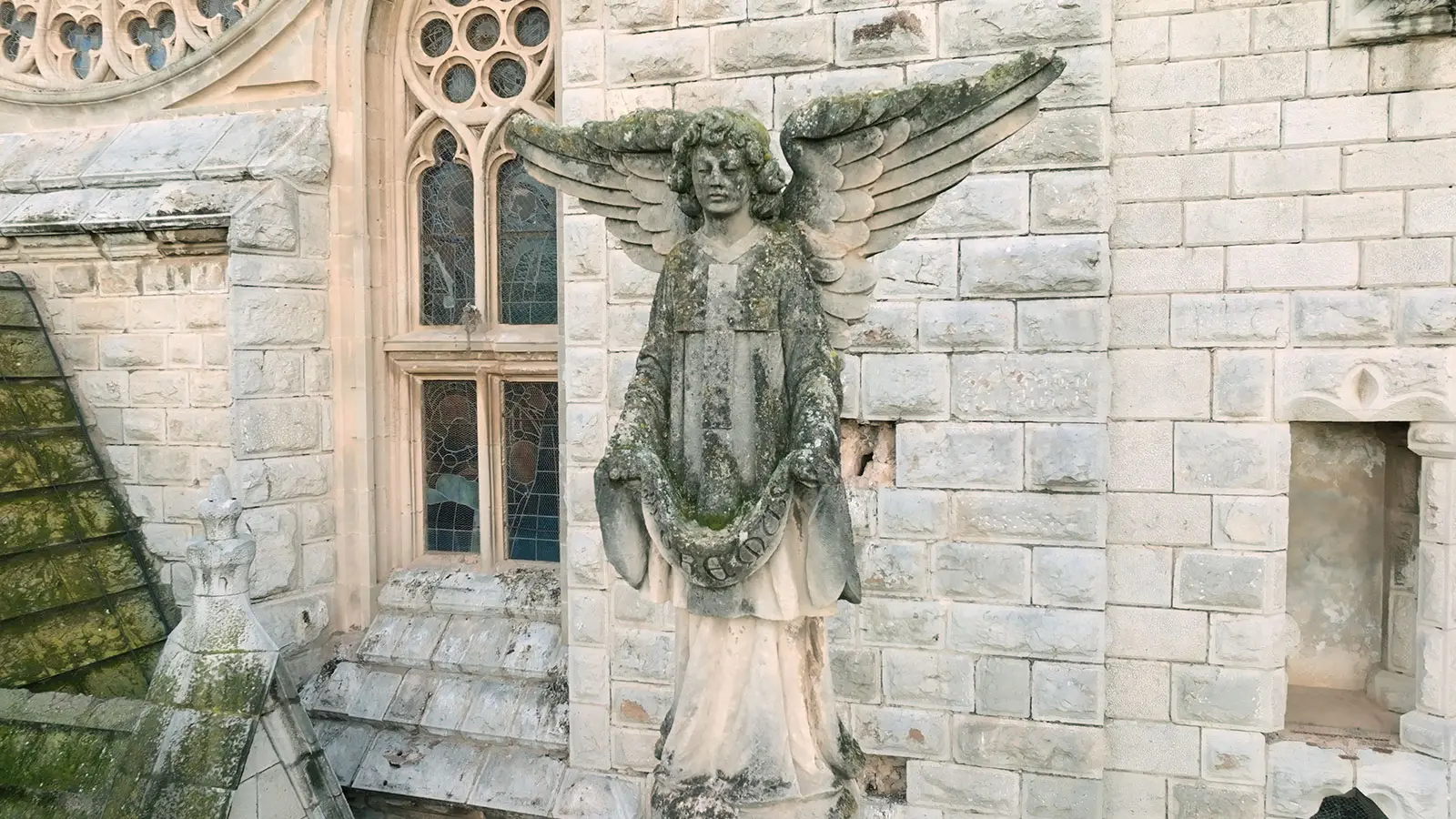
Rubió designed a Neo-Gothic façade with a clearly Gaudinian treatment and therefore Modernist in style. It is organised according to a symmetrical scheme defined by an atrium made up of three pointed arches with gables, flanked by two sculpted angels placed on columns, sheltering the statue of Sant Bartomeu, patron saint of the town. The central arch, larger than the others, provides access to the vestibule, which has three pointed doors. The façade is highlighted by a large central rose window flanked on the lower level by two windows that repeat the overall design. The outline of the façade forms a stepped crowning, emphasised in the central section by nine openings originally intended to house sculptures that were never installed. The vertical emphasis of the façade is completed by two pinnacles at the ends, of clear Gothic influence, placed as a finishing touch on the central section.
As a continuation of this design, Rubió also designed a side wall, parallel to Carrer del Born, which extends the style of the façade. This wall features similar stonework, from which columns and a monumental iron gate emerge, dominated by curved lines and vegetal decoration. A large monumental stone cross stands out in this ensemble, originally designed
with four arms, similar to those Gaudí incorporated into buildings such as La Pedrera, Park Güell, or the Sagrada Família.
Inside the church there is a 15th-century statue of the Virgin, which according to popular tradition was mutilated during the pirate attack on the town on 11 May 1561, an event commemorated annually in a popular festival known as Es Firó, which gathers several thousand people.