Can Falet
Although this is a mixed style between the prevailing regionalism of the period and the
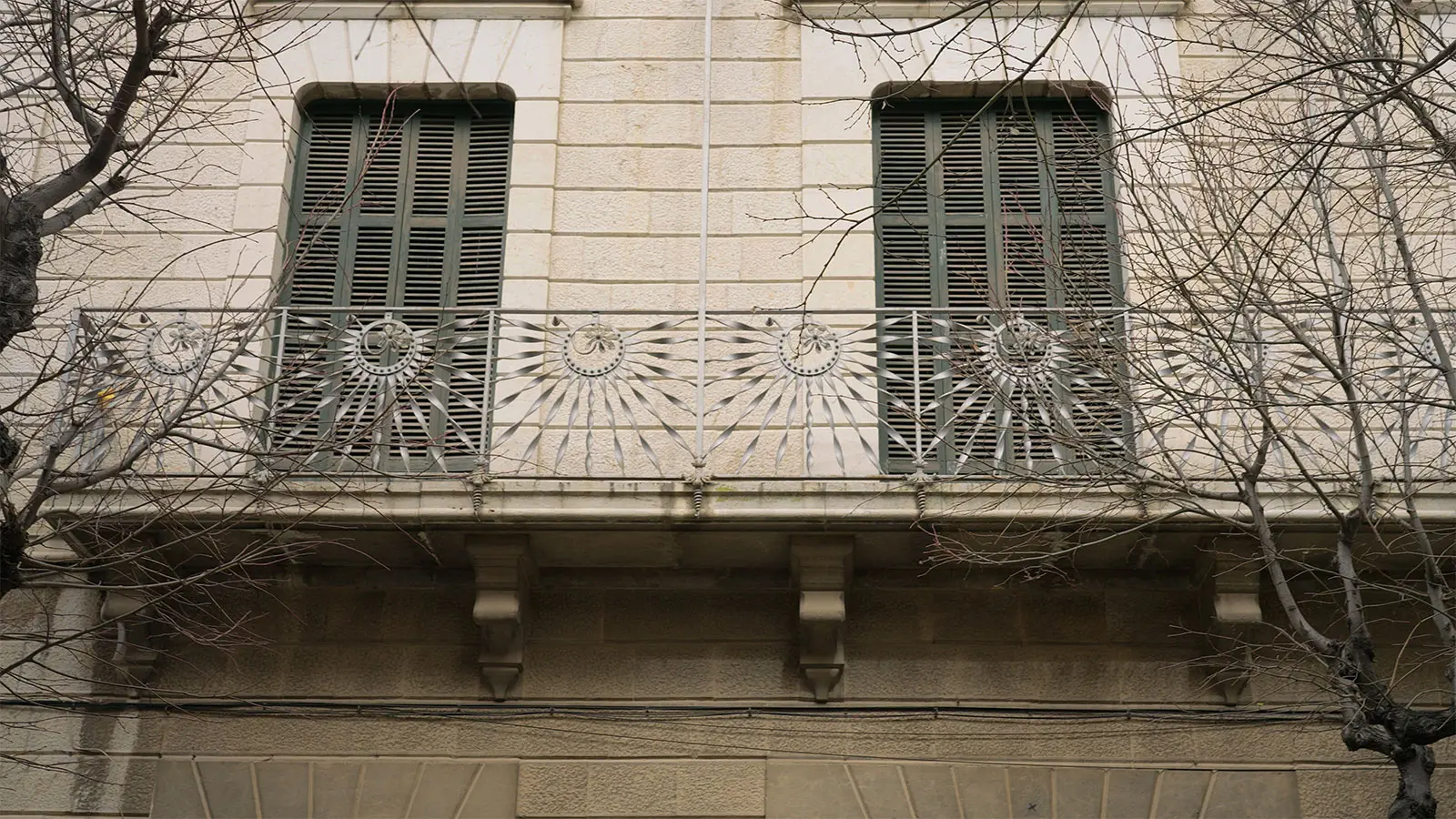
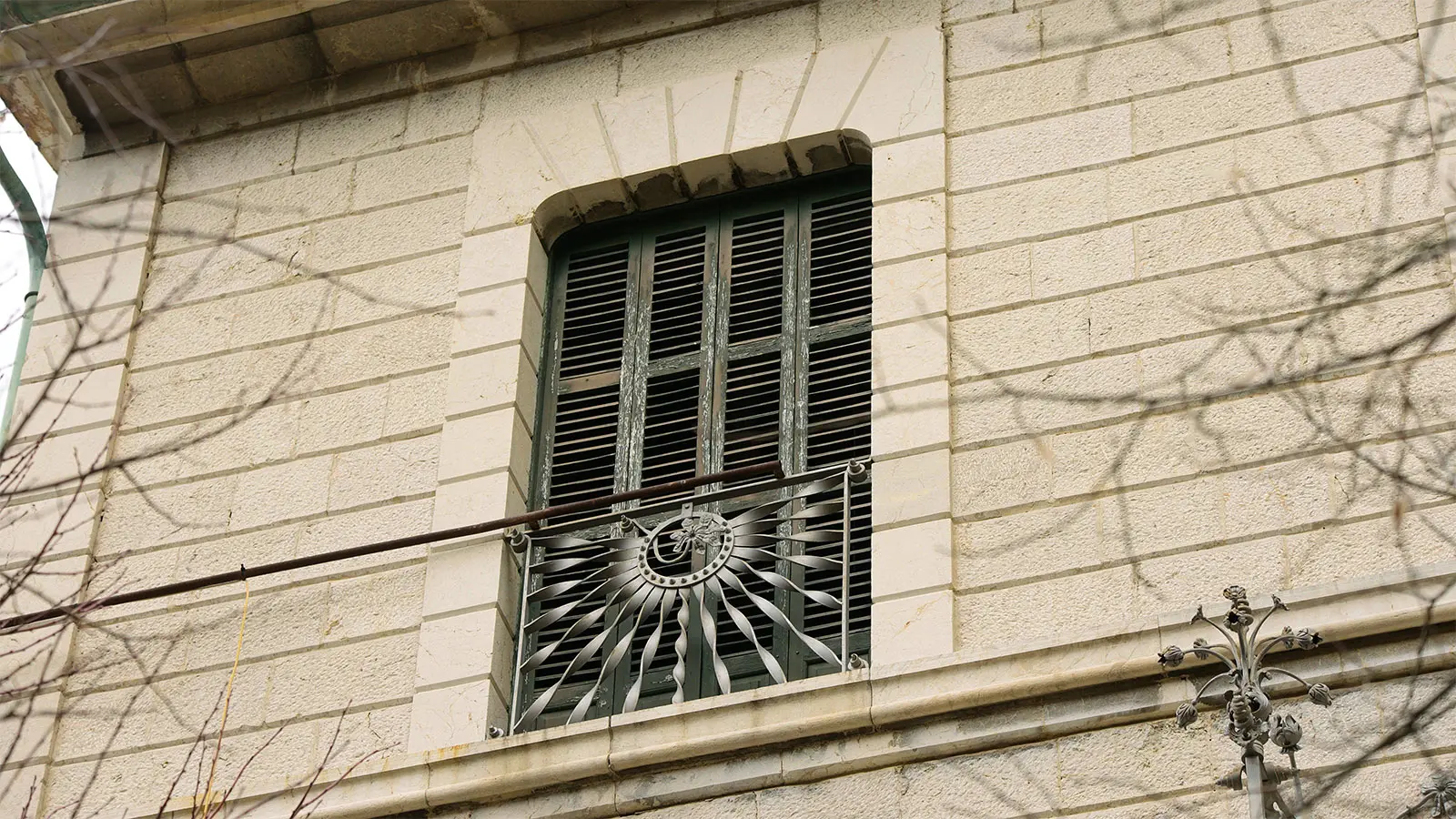
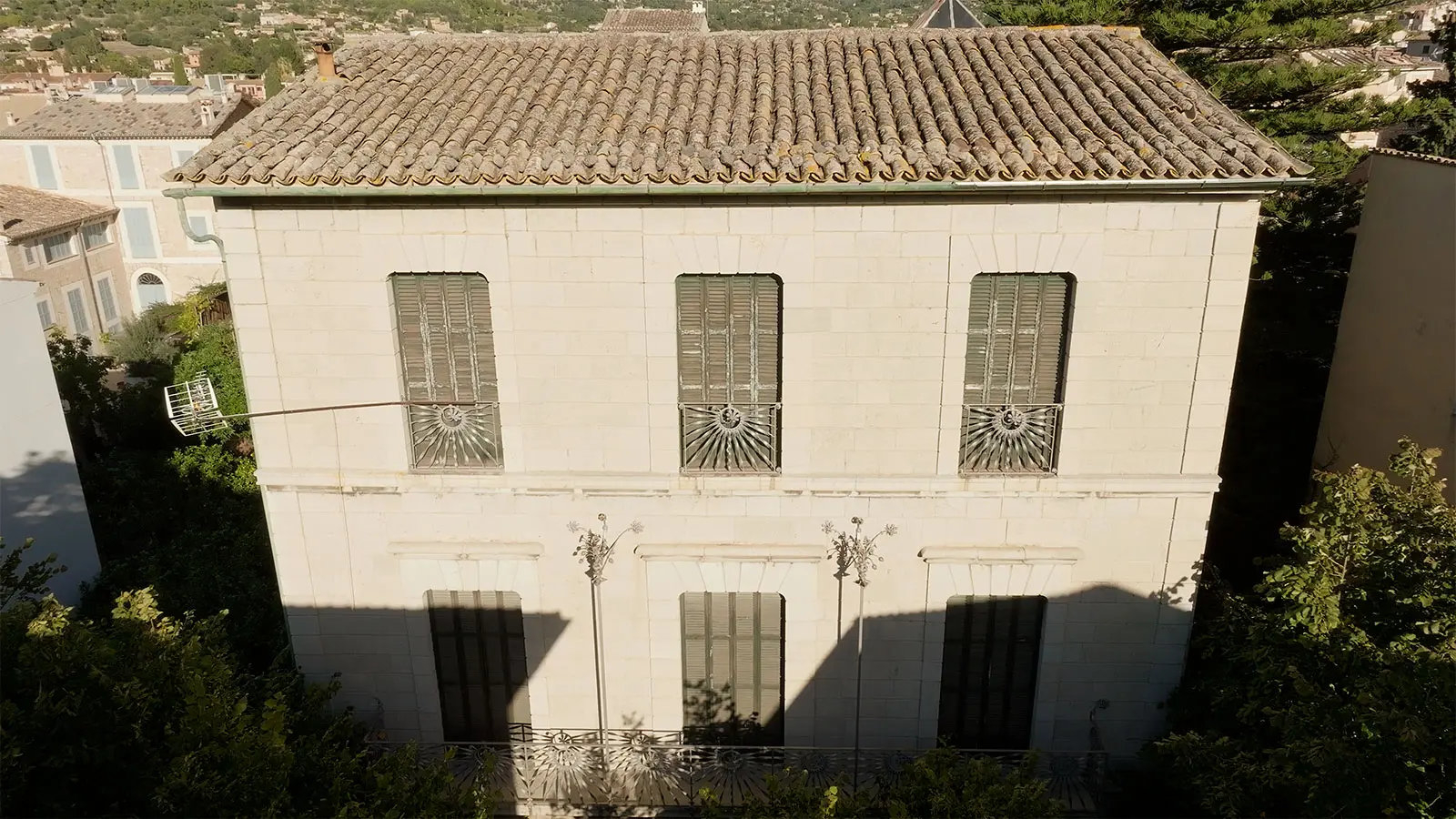
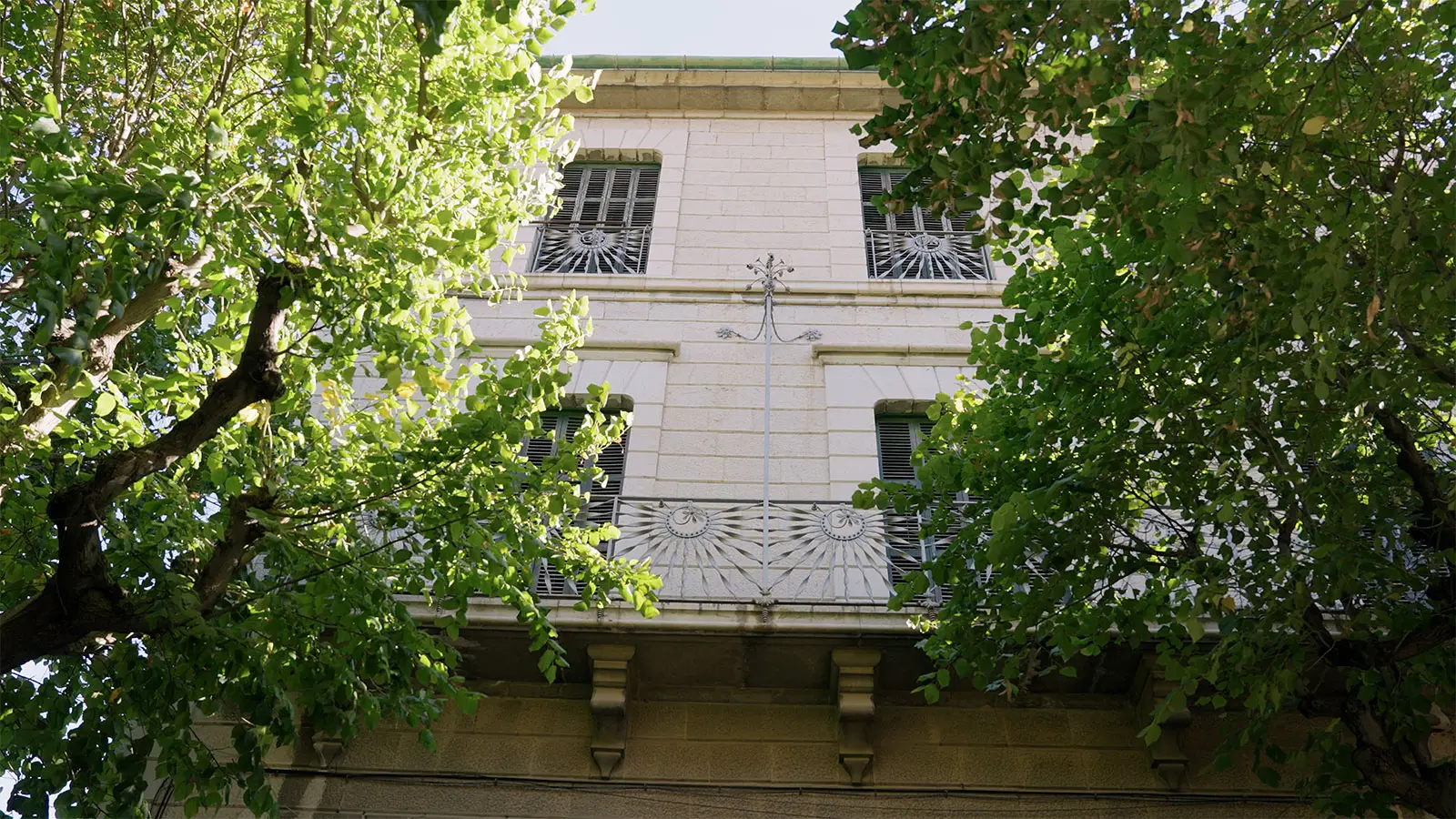
novelty of late 19th-century Art Nouveau, there is a strong presence of the new style imported from France. This can be seen in its façade, entirely clad in grey stone, and in the importance given to wrought-iron work.
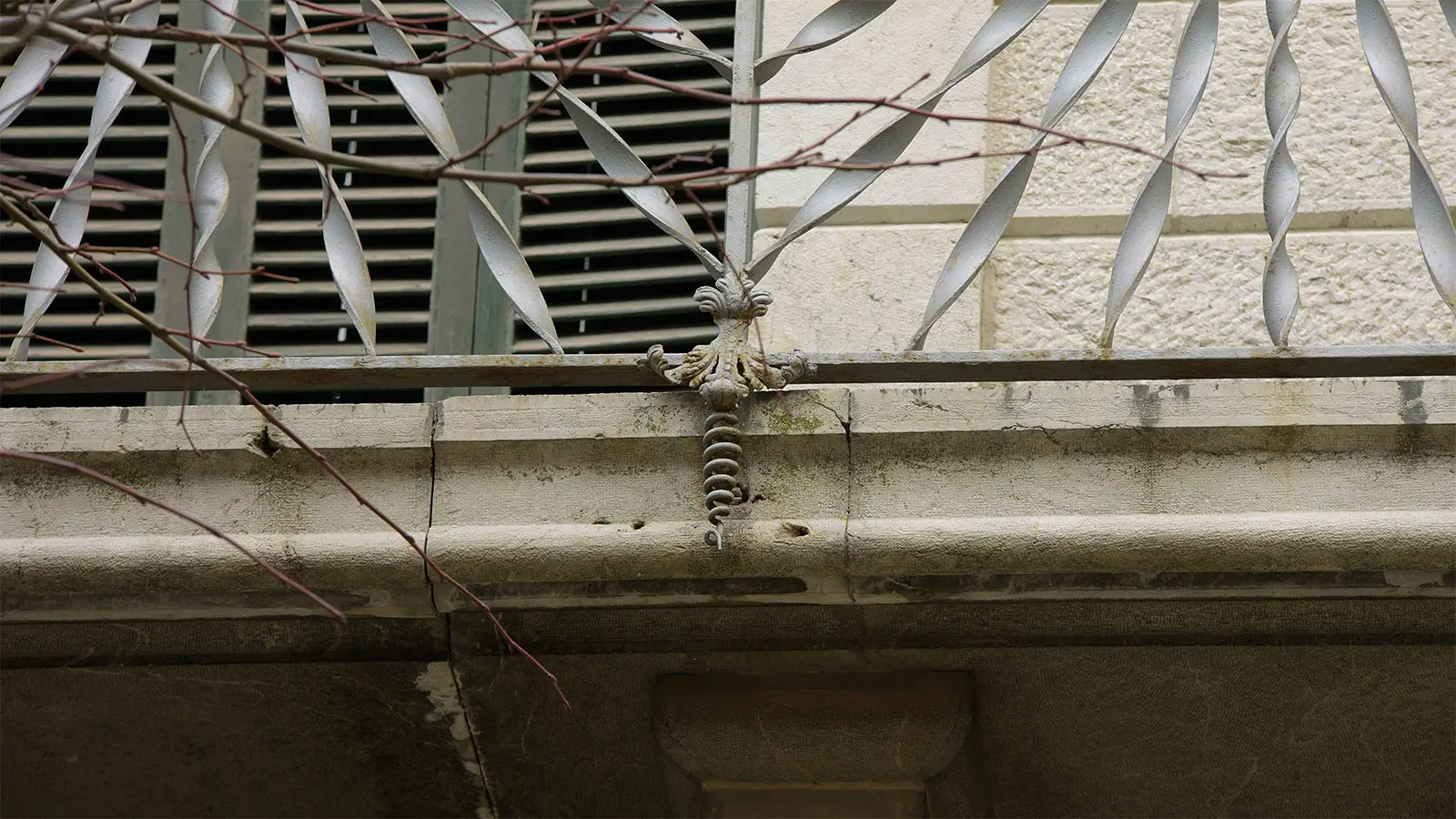
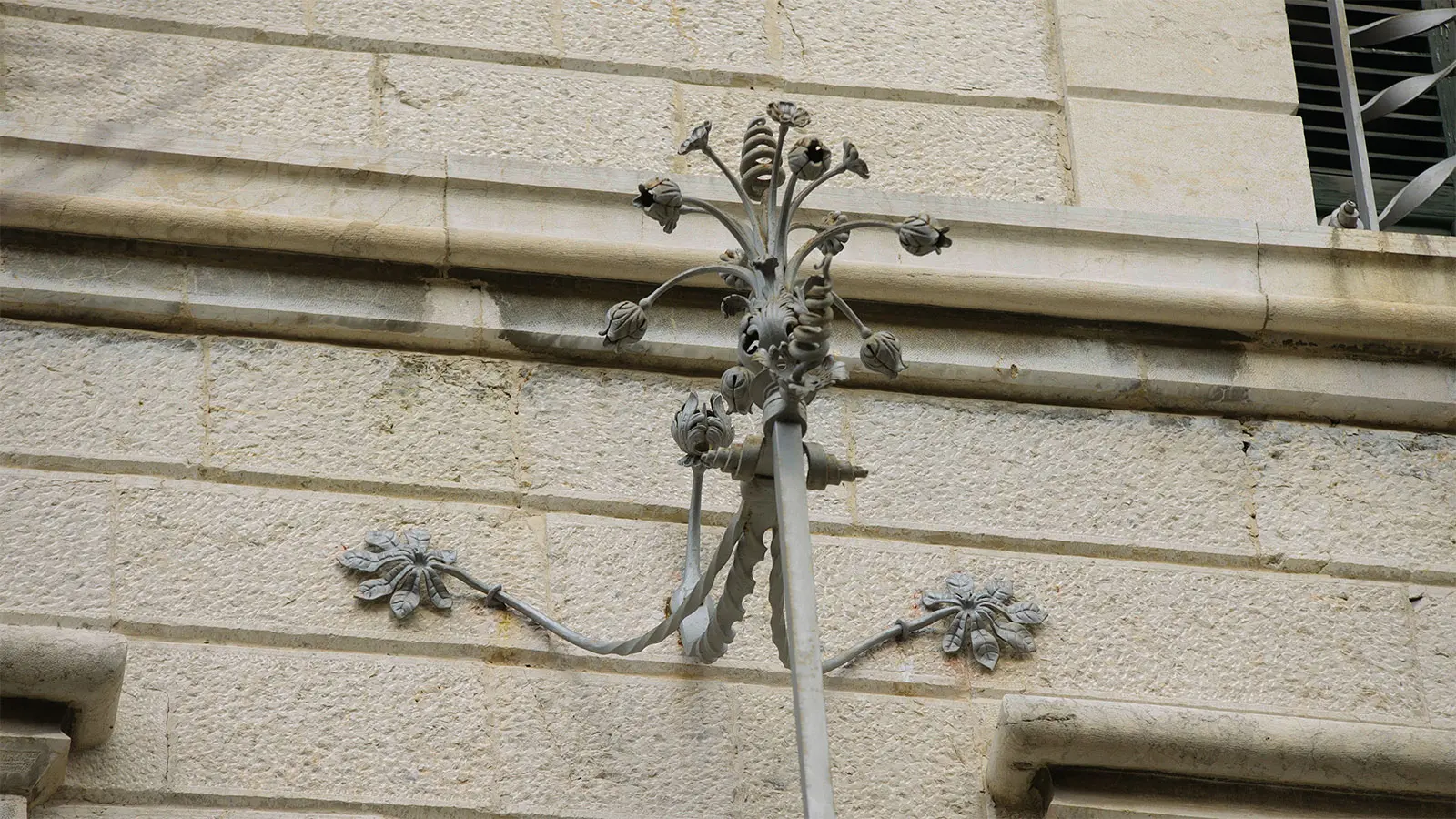
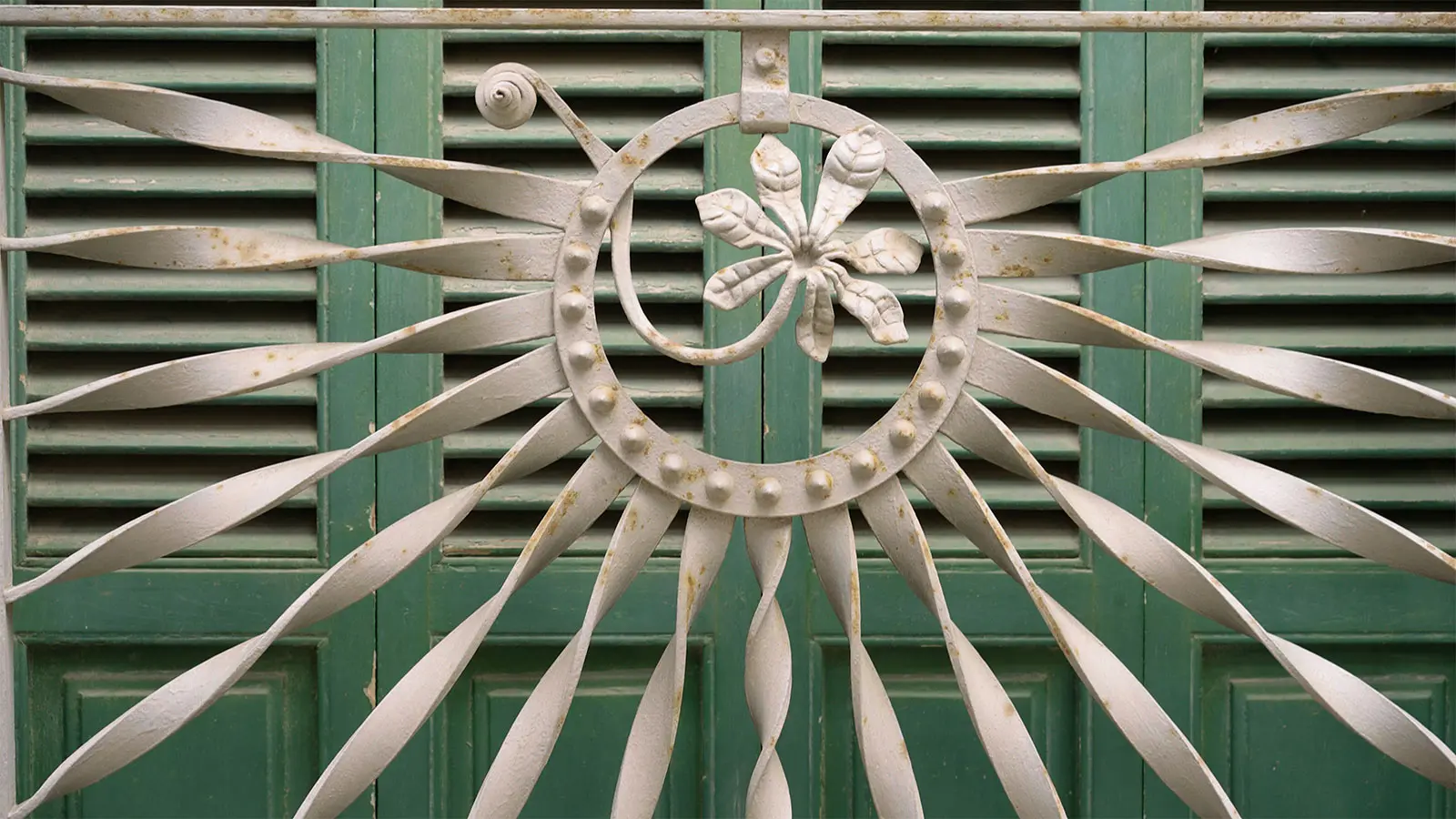
On the central balcony, although it shows strong symmetry, there is a distinctive vegetal decoration. It consists of a palm-shaped leaf twisted onto itself, from which entangled axes emerge like sun rays. This same decoration can also be seen on the side windows of the exterior entrance. The entire balcony is anchored to the wall by vertical supports in the form of floral bouquets, which would later be refined in the balcony of Can Prunera.
The exterior doorway consists of double-leaf doors richly decorated with flowers and fruits, and protected from street dust by a typically Mallorcan shutter.
It was very common to choose mouldings and wrought ironwork from catalogues, as most promoters were working across Europe. This led to motifs being repeated over and over again. This case is no exception, as the palm-shaped leaf of the railing is also found in another house of the same period on Carrer de la Poetessa, 69. Perhaps there was no catalogue involved and it was simply a case of neighbouring imitation, but in any case both works are identical.